


Understanding the Basics of Lock and Key Systems
- Adam Heard
- Sep 26, 2025
- 4 min read

Locks and keys have been essential components of security for centuries. They protect our homes, offices, and valuables from unauthorized access. Understanding how these systems work can help you make informed decisions about your security needs. This article explores the fundamentals of lock and key systems, the types of locks available, the role of locksmith services, and practical advice on choosing and maintaining your locks.
What Are Lock and Key Systems?
Lock and key systems are mechanical or electronic devices designed to secure doors, cabinets, safes, and other entry points. The basic principle involves a lock mechanism that can only be opened with a specific key or code. When the correct key is inserted or the right code is entered, the lock disengages, allowing access.
Locks come in various forms, but most share common components:
Lock body: The main housing that contains the locking mechanism.
Bolt or latch: The part that physically secures the door or container.
Keyway: The slot where the key is inserted.
Pins or tumblers: Internal parts that align with the key to allow the lock to open.
The key is cut to match the internal mechanism of the lock. When inserted, it aligns the pins or tumblers, enabling the bolt to retract.

Close-up view of a traditional pin tumbler lock with key inserted
Types of Locks and Locksmith Services
There are many types of locks, each designed for specific security needs. Understanding these can help you choose the right lock for your property.
Common Types of Locks
Pin Tumbler Locks
The most common type, found in residential doors. They use pins of varying lengths to prevent the lock from opening without the correct key.
Wafer Locks
Similar to pin tumblers but use flat wafers instead of pins. Often found in cabinets and vehicles.
Deadbolt Locks
Provide extra security by extending a solid metal bolt into the door frame. They are harder to force open.
Electronic Locks
Use keypads, cards, or biometric data instead of traditional keys. Increasingly popular for commercial and high-security applications.
Lever Handle Locks
Common in commercial buildings, these locks use a lever mechanism and are often paired with key cylinders.
Locksmith Services and Their Importance
Professional locksmith services are essential for installing, repairing, and maintaining locks. They can also help with emergency lockouts, key duplication, and upgrading security systems.
A skilled locksmith can:
Assess your security needs and recommend appropriate locks.
Install high-quality locks correctly to ensure maximum security.
Repair damaged locks to restore functionality.
Provide advice on maintaining locks to extend their lifespan.

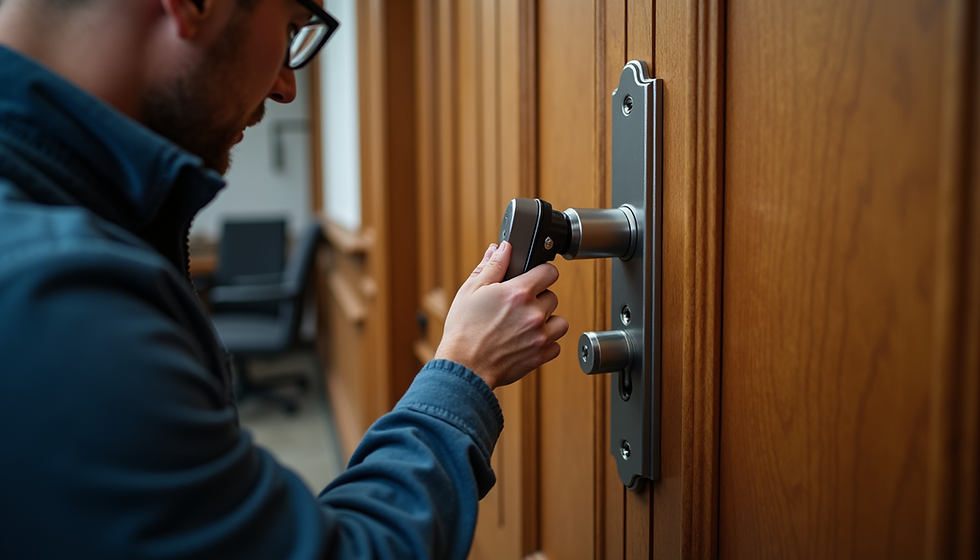
Eye-level view of a locksmith working on a door lock with tools
How Much Should a Locksmith Charge?
Understanding locksmith pricing can help you avoid overpaying and ensure you get quality service. Prices vary depending on the type of service, time of day, and complexity of the job.
Factors Affecting Locksmith Costs
Type of service: Emergency lockout services usually cost more than standard lock installation or repair.
Time of service: After-hours or weekend calls often incur higher fees.
Type of lock: High-security or electronic locks may require more expertise and time.
Location: Prices can vary based on your region and local market rates.
Typical Price Ranges
Emergency lockout: £50 - £150
Lock installation: £70 - £200
Lock repair: £50 - £120
Key cutting: £5 - £20
Tips to Avoid Overcharging
Get multiple quotes before hiring a locksmith.
Ask for a clear breakdown of costs upfront.
Use reputable locksmith services with good reviews.
Avoid locksmiths who quote very low prices but add hidden fees later.

High angle view of a locksmith pricing list and tools on a table
How to Choose the Right Lock for Your Needs
Selecting the right lock depends on your security requirements, budget, and the type of door or container you want to secure.
Consider the Following When Choosing a Lock
Security level: For external doors, choose high-security locks like deadbolts or electronic locks.
Durability: Look for locks made from strong materials such as hardened steel.
Ease of use: Consider how easy it is to operate the lock daily.
Compatibility: Ensure the lock fits your door or frame.
Additional features: Some locks offer pick resistance, bump resistance, or smart technology.
Practical Recommendations
For residential front doors, a Grade 1 deadbolt combined with a reinforced strike plate offers excellent protection.
For internal doors, a simple cylindrical lock may suffice.
For cabinets or safes, consider combination locks or electronic keypad locks.
If you want keyless entry, explore smart locks that can be controlled via smartphone apps.
Maintaining Your Locks for Long-Term Security
Proper maintenance can extend the life of your locks and keep them functioning smoothly.
Maintenance Tips
Lubricate locks regularly with graphite powder or silicone spray to prevent sticking.
Clean keyways to remove dirt and debris.
Check for wear and tear on keys and locks.
Replace damaged or worn keys promptly.
Test locks periodically to ensure they operate correctly.
If you notice any issues such as difficulty turning the key or loose components, contact a professional locksmith to inspect and repair the lock.
Enhancing Security Beyond Locks
While locks are a critical part of security, combining them with other measures can provide better protection.
Install security cameras to monitor entry points.
Use alarm systems that alert you to unauthorized access.
Reinforce doors and frames to resist forced entry.
Use security bars or grilles on windows.
By integrating multiple layers of security, you reduce the risk of break-ins and increase peace of mind.
Understanding the basics of lock and key systems empowers you to make smart choices about your security. Whether you need to upgrade your locks, repair a faulty mechanism, or seek advice, professional locksmith services are there to help. Taking the time to select the right locks and maintain them properly ensures your property remains safe and secure for years to come.


Comments